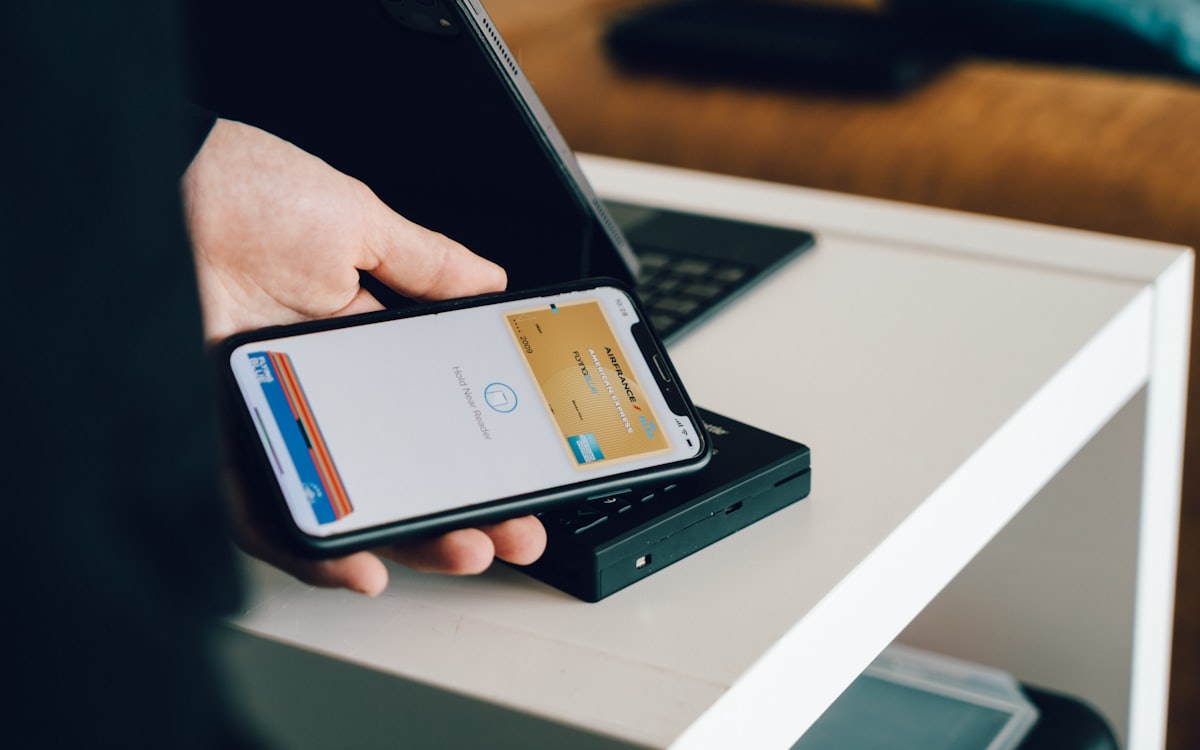
It's past 8pm. You've pulled down the shutter, counted the cash twice, and it still doesn't add up. Now you're scrolling through M-Pesa messages trying to remember which "Confirmed. You have received Ksh500" was the customer buying paint and which one was your neighbour's fundi paying for nails on deni. Sound familiar? Almost every duka owner in Kenya has lived that exact half hour.
M-Pesa made selling faster. It didn't make tracking easier — if anything, it hid the problem. Cash you can see and count. M-Pesa just pings your phone and disappears into a wall of messages that all look the same by closing time.
The wallet mix-up that quietly costs you
A huge number of small shops still receive business payments straight into the owner's personal M-Pesa number. One phone, one line, groceries and school fees and biashara money all swimming in the same pool. The moment that happens, you lose the ability to answer a simple question: what did the shop actually make today?
You end up guessing. Sometimes the guess is optimistic and you withdraw money you needed for restocking. Sometimes it's pessimistic and you think the shop is struggling when it isn't. Either way, you're running a business on vibes.
You don't need a Till number or Paybill from day one — plenty of shops in Gikomba, Eastleigh and small towns upcountry still run on a personal line. But at the very least, dedicate a phone and a line to the shop alone. That one separation is what makes reconciliation possible instead of a nightly guessing game.
The habit most shops skip
Here's the second mistake, and it's the bigger one: not recording each M-Pesa sale the moment it happens.
A customer pays, the confirmation buzzes, you hand over the item and move to the next person. By closing time you've got thirty, forty messages sitting untouched, no record tying any of them to what was actually sold. Then a customer swears they paid and didn't get their item, or paid twice by mistake. You have nothing to check against. And if it's not even you on the till that day — your employee, your sister, a relief cashier — your visibility drops to almost zero.
The rule is simple, even if it's hard to keep: record it when it happens, not "later," not "at closing."
Why the drawer never balances
If cash lives in a drawer and M-Pesa lives only in your head, closing time turns into a small daily battle. You count coins and notes, scroll for M-Pesa confirmations, and try to force both numbers to agree with whatever total you think you sold. Small gaps sneak in everywhere — a sale you forgot to note, a confirmation message you missed, an item given out on deni that never got logged as credit rather than cash. One day's gap is annoying. Thirty days of gaps is a business you can no longer read.
A reconciliation habit that actually works
You don't need spreadsheets or an accountant for this. You need five honest minutes a day:
- Record every sale as it happens — cash, M-Pesa, or deni — not from memory at closing.
- Tag each sale with the payment method used.
- At the end of the day, pull a report of total sales by payment method.
- Compare the M-Pesa total against your real M-Pesa balance for the day.
- Chase down any difference immediately, while you still remember who bought what.
Do this daily and small problems get caught while they're still small — a missed entry, a wrong amount typed in, or occasionally something worse, like a fake payment message that was never actually received.
Where a POS closes the gap for good
This is the exact problem StockWise was built to remove. Every sale gets recorded with its payment method — M-Pesa included — the moment it happens, not rebuilt afterward from a scroll of old messages. Because stock is tracked alongside sales, you can also see whether what left the shelf actually matches what got paid for.
At closing, instead of adding up messages by hand, you open the daily sales report and see M-Pesa collections, cash collections, and any deni given out — all in one screen. That report is your reconciliation tool. Set it against your real M-Pesa balance and any mismatch jumps out immediately, instead of getting buried under weeks of "close enough." And since it runs from a phone or tablet, whoever is manning the till that day can record sales in real time — you don't have to be the one standing there.
Do this for a month and two things happen: small leaks stop draining your business, and you finally have real numbers — how much of your biashara actually runs on M-Pesa, which days carry the week, whether your cash flow matches what you're truly selling.
If you're still reconciling M-Pesa from memory and a pile of phone messages, this is a good month to stop. Start your free trial and see your first proper end-of-day report, or talk to us if you'd like help setting it up for your shop.