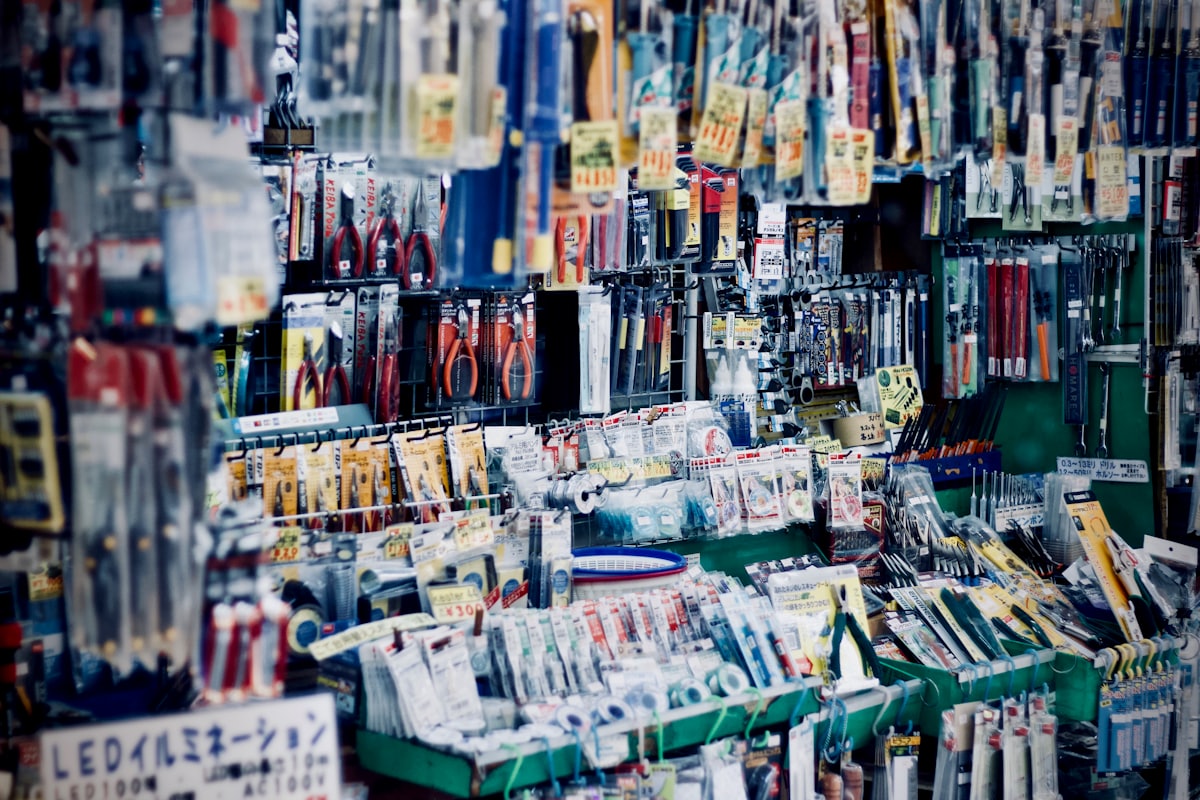
A fundi walks in on a Saturday morning asking for half a kilo of three-inch nails, two lengths of one-inch pipe, and "hiyo paint ya kijani, the one you sold me last month." You know the paint. You don't remember if there's stock left, because the last three deliveries from your supplier in Gikomba got scribbled into the same exercise book you use for everything else — sales, deni, purchases, even a phone number or two. By the time you've flipped to the right page, he's already asked if he can just pay you Friday.
That scene repeats itself in hardware shops from Kirinyaga to Kitengela every single day. It's not a staffing problem or a hard-work problem. It's a tracking problem.
A till was never built for this
Cash registers and basic tills do one job well: ring up a sale and spit out a receipt. That's fine for a shop selling ten kinds of things. It falls apart when your shelves carry nails in six sizes, pipes in four diameters, paint in three brands and five litre sizes, cement, wire mesh, hinges, padlocks, and whatever else a dozen suppliers have dropped off this month. A till has no memory of which fundi still owes you for last week's cement, and no way to tell you that 3-inch nails are almost finished until a customer is standing at the counter asking for them.
Hardware retail runs on stock, suppliers, and credit. A system built only around the cash drawer misses all three.
Every size is its own item, not a guess
This is where most hardware dukas lose money without realising it. A half-inch pipe and a one-inch pipe are not "pipe" — they're two different products with two different costs and two different stock counts. Mix them up in your head or on paper long enough, and you'll eventually sell one at the wrong price or promise a customer stock you don't actually have.
In StockWise, each size, brand, or variant gets recorded as its own product — its own count, its own cost price, its own selling price. When someone asks "unayo hii size?", you check the screen, not your memory.
Purchases in, cost prices right
Most hardware owners buy from more than one supplier, and prices shift depending on the season, the quantity, or simply who you know. Record a purchase in StockWise as it arrives and two things happen automatically: your stock count goes up, and your cost price updates to what you actually paid. That matters later, because your profit numbers are only honest if your cost numbers are.
Deni doesn't have to live in a notebook
Credit is how this business works. Contractors and fundis buy now and settle once a client pays them — sometimes next week, sometimes next month. An exercise book handles this until it gets rained on, a page tears out, or you simply can't remember if that KES 3,000 was ever paid back.
Three things worth doing, notebook or not:
- Attach every credit sale to a named customer, not a vague "on account."
- Write down the date, so old debts don't quietly become bad debts.
- Log part-payments the moment they happen, not at the end of the day from memory.
StockWise does this by keeping a running deni balance per customer — what's owed, what's been paid, and when — so a torn page never costs you money again.
Busy till, thin profit — a common trap
A shop can feel like it's doing well simply because there's a queue at the counter, while a chunk of what's moving barely covers what you paid for it once transport and breakages are factored in. Cement and paint behave differently from small fittings — margins across a hardware shop are never one flat number.
Sales and profit reports show you, item by item, what's actually earning and what's just occupying shelf space. That's the information that should decide your next order — not a hunch.
Low-stock alerts, and staff who don't need a computer
Running out of a fast-moving line — a common pipe size, a popular cement brand — usually isn't a supply problem, it's a nobody-noticed problem. Low-stock alerts flag items before the shelf goes empty, and stock reports separate what's moving fast from what's been sitting since March.
Because StockWise runs on a phone or tablet, you don't need a dedicated computer chained to the counter, and you can give your cashier or store manager their own login with only the access they need — you don't have to hand over the whole business to run the till.
Built from hardware, not bolted onto it
StockWise started in hardware retail, so decisions about how stock, variants, suppliers, and deni are handled came from how a Kenyan hardware shop actually runs — not adapted from a supermarket template. It's since grown to fit many other kinds of businesses, but hardware is where the thinking began. Plans start from KES 1,500 a month, with a free trial to see how it fits your shop before you commit.
If you're tired of flipping through an exercise book to answer "unayo stock?", start your free trial or talk to us about setting StockWise up for your hardware shop.